



Automotive starter motors may appear simple but the stresses they endure make their design and assembly surprisingly complex. They must survive hundreds of thousands of starts in temperatures ranging from Arctic cold to intense under‑hood heat, deliver high torque under shock loads and vibration, and remain sealed against dust, oil and moisture. These requirements drive the need for sophisticated adhesives, sealants and lubricants in starter motor manufacturing.

Engineering Requirements for Dispensing in Starter Motors
Starter motors operate in harsh conditions. Dispensing applications in starter motor assembly must meet extremely demanding process and material requirements. The system must handle high-viscosity materials—such as epoxy adhesives, polyurethane sealants and lubrication—without pulsation or inconsistent flow. Controlled flow rate and accurate bead geometry are critical, especially in narrow grooves or complex sealing paths.
In high-volume starter motor production, dispensing units must offer repeatability and automatedcontrol, enabling consistent dot or bead placement over thousands of duty cycles. Temperature-compensated pressure and flow monitoring help maintain uniform deposition despite material viscosity changes.
Applications in Starter Motor Manufacturing
Magnets and Motor Housing Bonding
In starter motors, adhesives bond permanent magnets to the rotor or stator. Some high‑temperature epoxy adhesives provide structural strength up to 180 °C, cure with UV activation followed by heat, and resist vibration and chemicals.
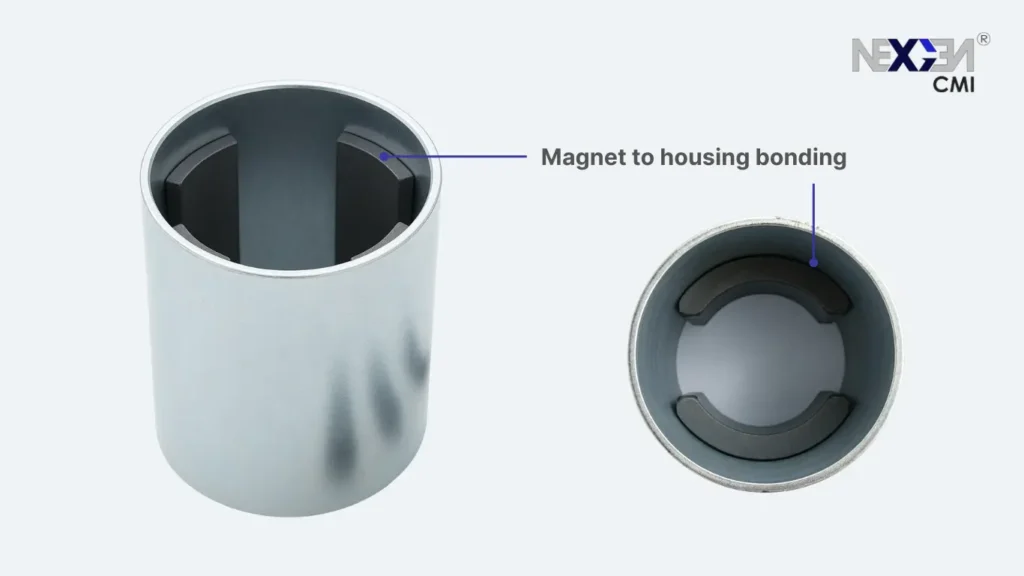
Adhesive volume, placement, and bead uniformity directly affect magnetic alignment and mechanical stability under high-speed rotation. NEXGEN CMI offer precision metering solutions that let these adhesives be dispensed as controlled beads or dots and maintain a consistent flow rate even as material viscosity fluctuates with temperature. This prevents air entrapment, over-dispensing, or adhesive starvation along the bond line.
Adhesive Dispensing System ConsultationLubrication of gears and bearings
Starter motors contain spur gears, bearings and splines that must be lubricated to reduce friction and withstand repeated shock loads.
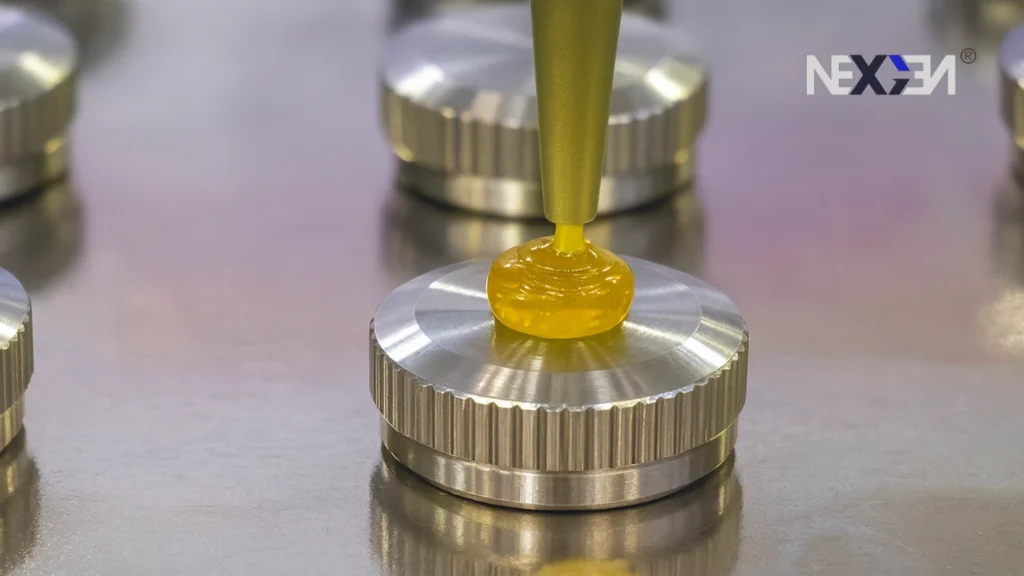
Grease used in starter motors is prone to oil separation, causing inconsistent flow and uneven lubrication. NEXGEN CMI’s dispensers handle greases of different viscosities, allowing precise shot sizes into bearing races or gearboxes. The system maintains low and uniform pressure from material feeding to metering, effectively preventing oil separation and phase instability in high-viscosity greases. Accurate dispensing reduces waste and ensures that every component receives the correct grease volume.
Oil Separation Prevention Dispensing System ConsultationSealing starter motor
In starter motor assemby, CIPG (Cure-In-Place Gasket) technology is widely applied to housings, connectors, and sensor covers. Polyurethane or RTV silicone sealants are dispensed into grooves and then cured to form flexible gaskets that require compression during assembly.
FIPG (Form-In-Place Gasket) materials, on the other hand, create permanent seals with superior resistance to heat, oil, and chemicals. Both methods demand precise dispensing to ensure leak-free sealing and long-term reliability.
Our Dispensing Solutions for Starter Motor Manufacturing
NEXGEN CMI develops automated dispensing platforms capable of handling adhesives, sealants, lubricants with widely varying viscosities and curing behaviours. Our systems provides precise metering and dosing, allowing bead widths and heights to be tailored on stator housings, rotor assemblies, connectors and shaft bearings. The ability to switch feed sources automatically minimises downtime during material changeovers, which is essential for high‑volume automotive production.
If you’re looking to optimize your starter motor production with consistent bead quality and continuous material supply, our engineering team is ready to support your next project!
Contact Us