



Thermal interface materials (TIM) fills microscopic air gaps and surface irregularities between mating surfaces, which would otherwise trap air – a poor conductor of heat. By eliminating these gaps, TIM reduces thermal resistance between surfaces, ensures uniform heat conduction from the component to the heat sink, preventing overheating.
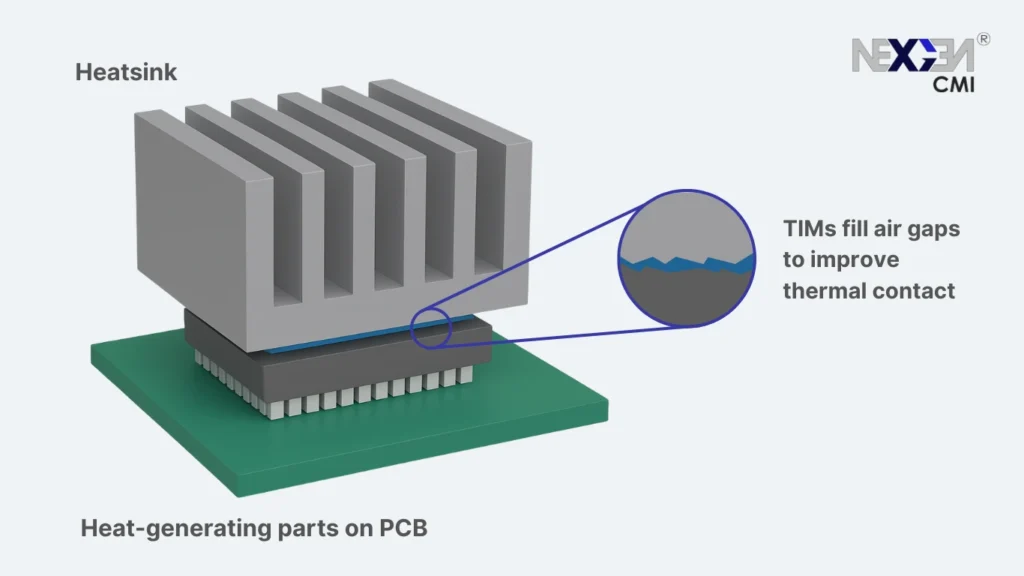
In this application, thermal interface materials are dispensed directly onto heat-generating components (processors, power devices, LEDs,…) or onto heat-dissipating surfaces (heat sinks, metal enclosures,…) before assembly. The applied material is then typically pressed to ensure an even and void-free layer.
For 2K thermal gap fillers, the material is meter-mixed and dispensed through a two-component system using an AB cartridge or mixing head. It is automatically applied in a bead or rectangular pattern over target areas and cures into a soft, elastomeric layer after assembly.
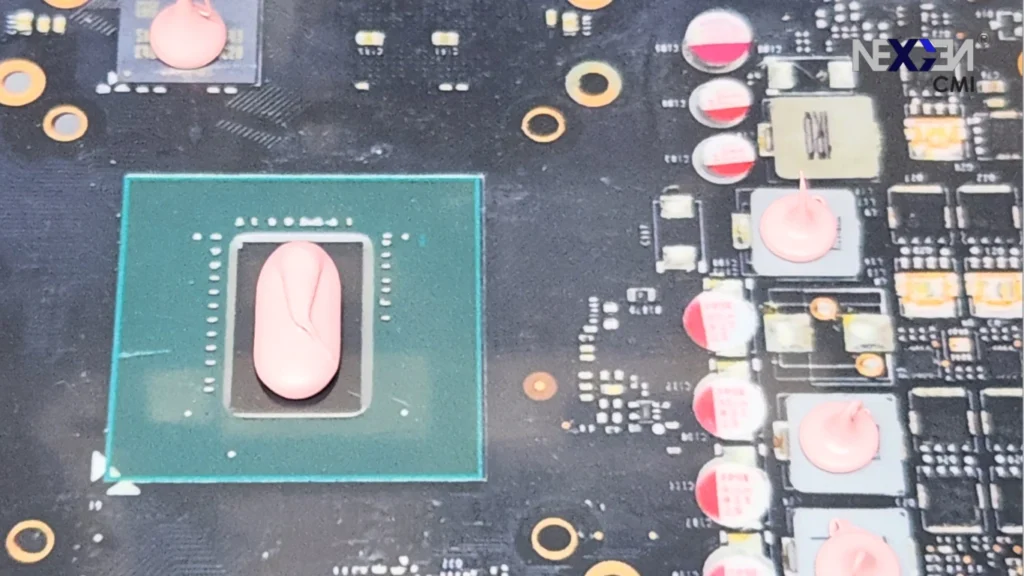
Thermal interface materials are available in several forms—such as dispensable greases and gels, pads, and adhesive films—but liquid-dispensable TIMs provide greater flexibility for automated production. Unlike pre-cut pads, dispensed TIMs can be applied in precise patterns and controlled volumes tailored to each design, allowing quick adjustments without the need for retooling. Common materials include silicone-based thermal greases and gels for reworkable interfaces, and two-component thermally conductive adhesives (epoxy or polyurethane) for permanent bonding and enhanced mechanical stability.
TIM formulations often present unique challenges for dispensing equipment:
- High viscosity: Many TIM pastes and gels are highly viscous, requiring strong, steady pressure to dispense smoothly through needles or valves without pulsation or flow hesitation.
- Abrasive fillers: To achieve high thermal conductivity, TIMs are typically loaded with ceramic or metallic fillers (e.g. aluminum oxide, boron nitride,…). These filler particles are very hard and can erode seals, auger screws, and valve components over time. The abrasive nature of TIMs means standard dispensing equipment may wear out quickly or experience clogs if not designed for filled fluids.
- Precise volume control: Applying the right amount of TIM is critical. Too little material will result in poor contact and heat transfer, while too much can cause “squeeze-out” where excess paste spreads onto other components or PCB areas. TIM dispensing must therefore be very consistent shot-to-shot, depositing just enough to cover the interface without overflow. This requires precise control over deposit size (whether dots, lines or complex patterns).
- Two-part formulations: Although many TIMs are one-component compounds, there are two-component gap filler TIMs that cure upon mixing. These 2K TIMs demand accurate ratio metering and thorough mixing during dispensing. Maintaining the correct mix ratio and uniform blend is challenging given the high density of fillers and the need to dispense within the material’s pot life. Any deviation can affect thermal performance or curing of the TIM.
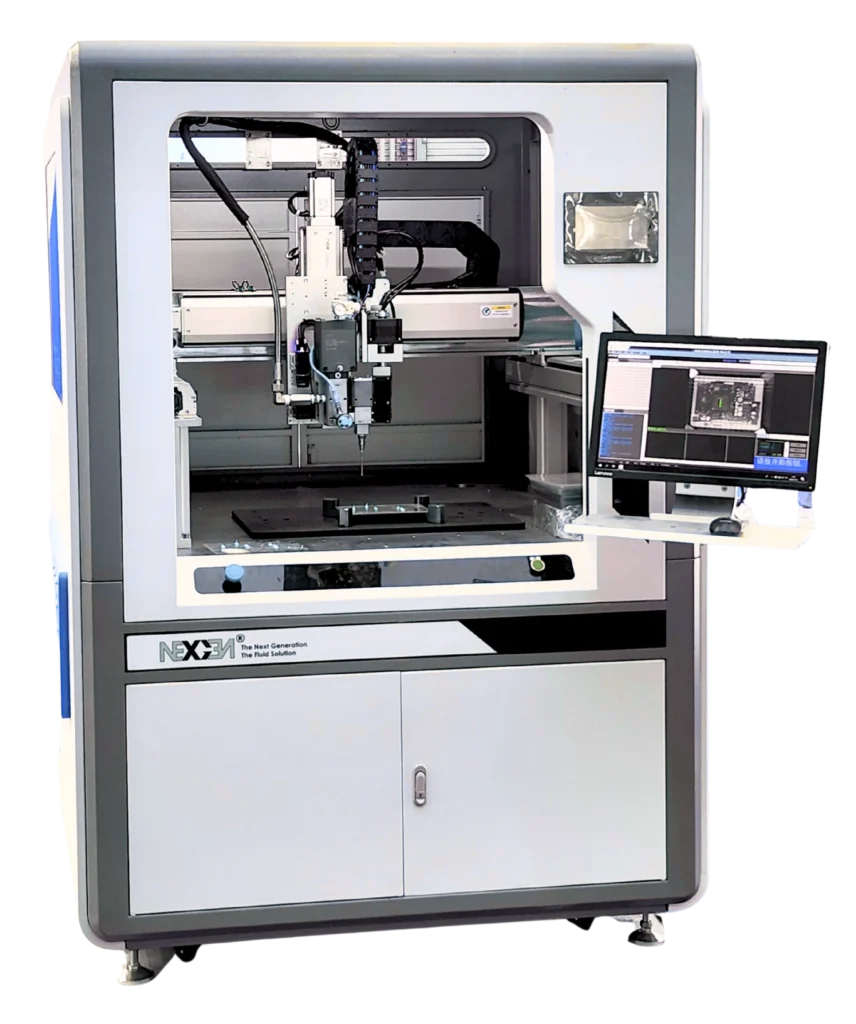
NEXGEN CMI addresses these challenges with specialized dispensing systems tailored for TIM materials. By combining robust hardware and precise control, our TIM dispensing solutions enable air-free, reliable TIM application even for the toughest materials. The result is an optimal thermal interface with minimal material waste and a repeatable process for high-volume electronics assembly.
Contact us for system consultation