


Potting (encapsulation) is a method of fully protecting electronic assemblies by embedding the entire PCB or component in a solid block of resin. Potting provides a very high level of protection: the thick polymer shell shields components from moisture, corrosive agents, and dust, and it greatly enhances mechanical durability. It’s commonly used for industrial electronics or any application operating in harsh conditions.
In the potting process, the assembled board is placed in a container or mold (the “pot”), and a liquid compound (typically an epoxy, polyurethane, or silicone resin) is poured or dispensed over it, completely filling all voids and covering the electronics. This liquid then cures (hardens) into a solid, encasing the device completely.
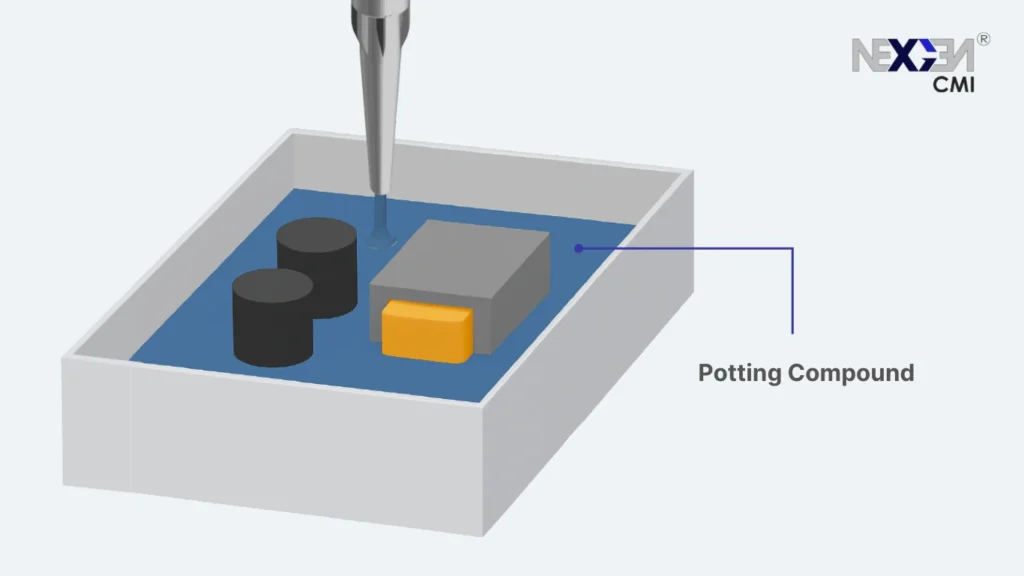
From a dispensing standpoint, potting compounds introduce several challenges and requirements:
- Two-component mixing: The majority of potting compounds are two-part formulations that must be mixed in the correct ratio as they are dispensed. However, the mixed material has a limited pot life (working time) before it begins to cure. The equipment must dispense and fill the assembly within this timeframe. All of these steps – conveying both components, dosing the exact amounts, properly mixing, and dispensing into the product – need to occur in a controlled, reliable manner to meet potting quality requirements.
- High viscosity and flow control: Potting resins range from low viscosity to very high viscosity. The viscous nature means longer fill times for larger volumes, and the dispensing equipment must maintain a steady flow without sputtering. Starting and stopping the flow cleanly is another challenge – a viscous resin can continue to string after the valve closes. This requires dispense valves with snuff-back or suck-back features to cut the fluid cleanly.
- Air bubbles and voids: Air bubbles introduced during mixing or dispensing can become trapped around components. In the cured potting, these voids not only weaken mechanical protection but also can expose the electronics to moisture or create localized hotspots. However, avoiding bubbles is difficult because mixing the two components can generate air, and pouring over complex geometries can trap pockets of air.
- Mess and overflow: Dispensing large volumes of resin can be messy. If the dispense pattern or volume is not well-controlled, resin can overflow the pot or go onto areas it shouldn’t. The system must be capable of bulk dispensing smoothly. Additionally, cured spills are very hard to remove, so accuracy in hitting the target area is important.
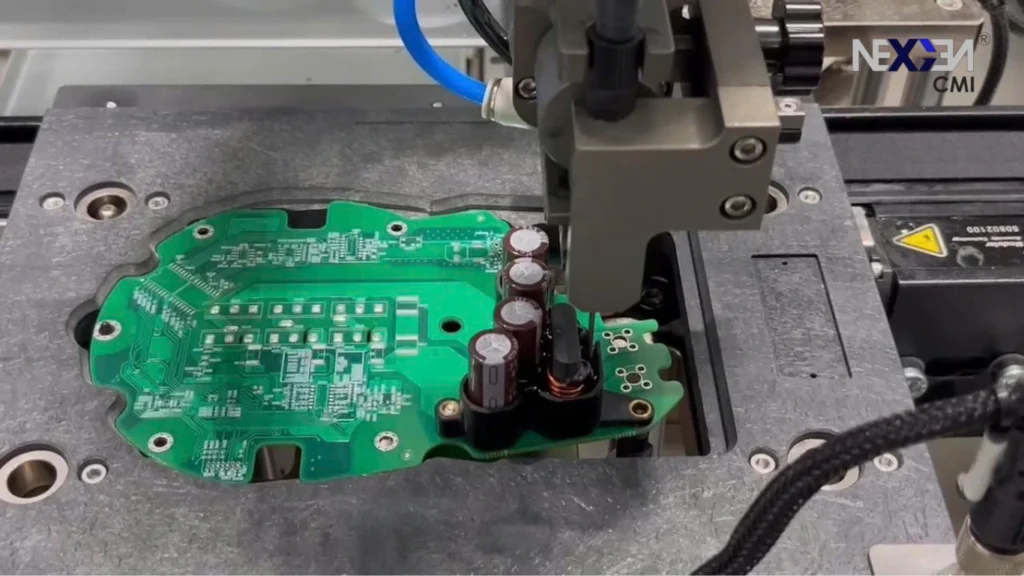
NEXGEN CMI provides integrated meter-mix dispense systems and process solutions to tackle potting challenges. Manufacturers can encapsulate their PCBAs with confidence that each unit is mixed properly and free of voids, resulting in a durable product that meets the highest protection standards. Contact our expert for consultation about potting solution.
Potting system consultation