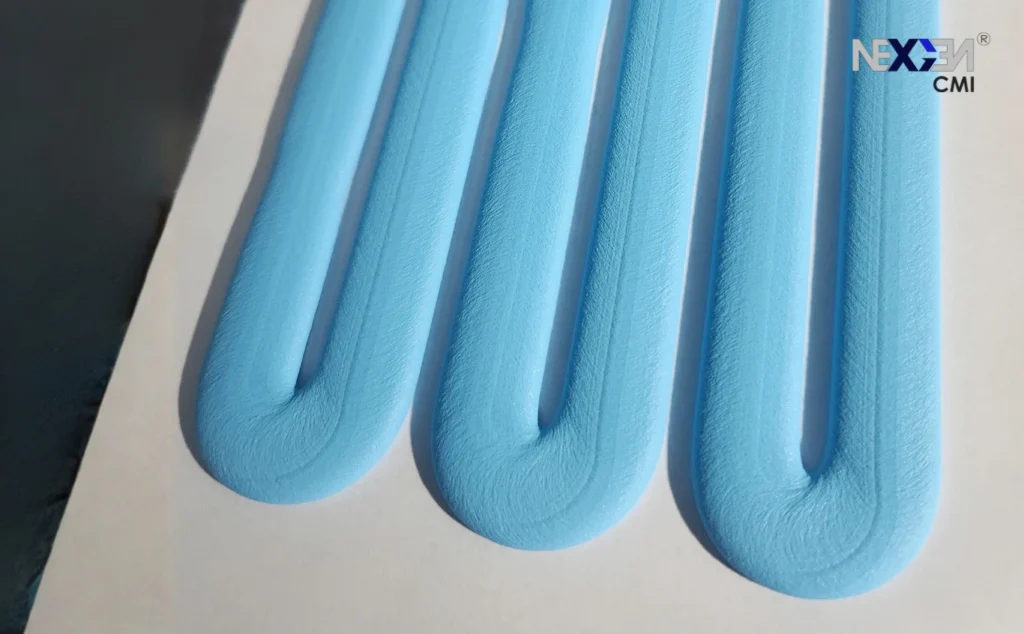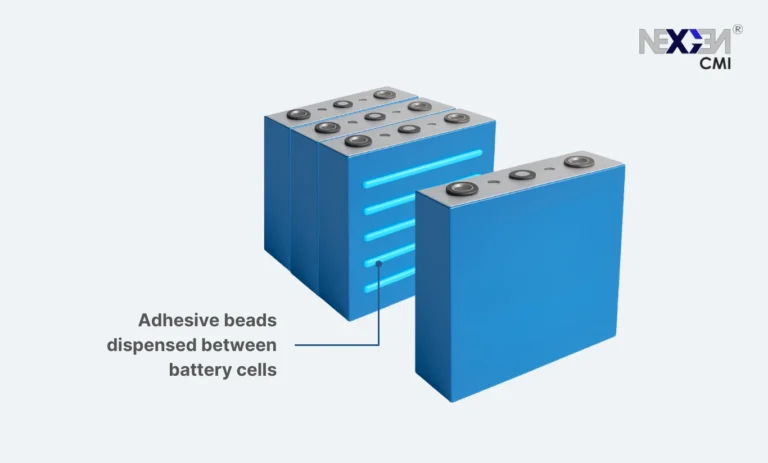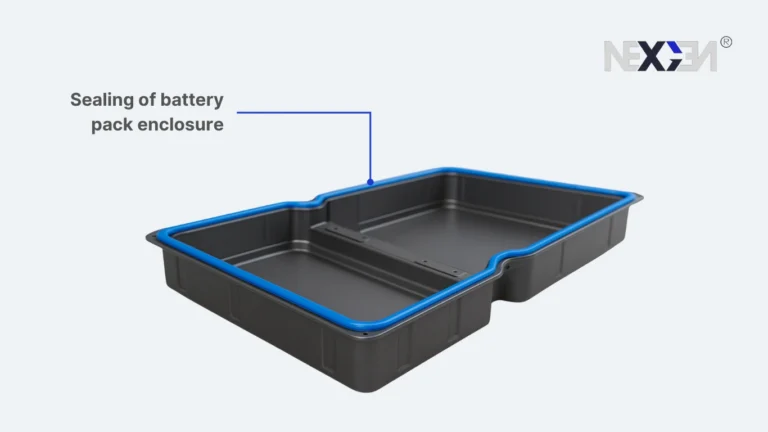




This process fills the microscopic gaps between battery cells and cooling plates to create an efficient thermal path for heat dissipation. By bonding the cell array directly to cooling plates, it ensures uniform heat conduction, mechanical stability, and protection against overheating. Effective thermal coupling keeps cell temperatures within the optimal range (typically 35–60 °C), extending battery life and performance.
In this application, thermally conductive materials are dispensed between cell surfaces and cooling plates, or along contact interfaces with cooling ribs or heat sinks, ensuring complete and uniform coverage.
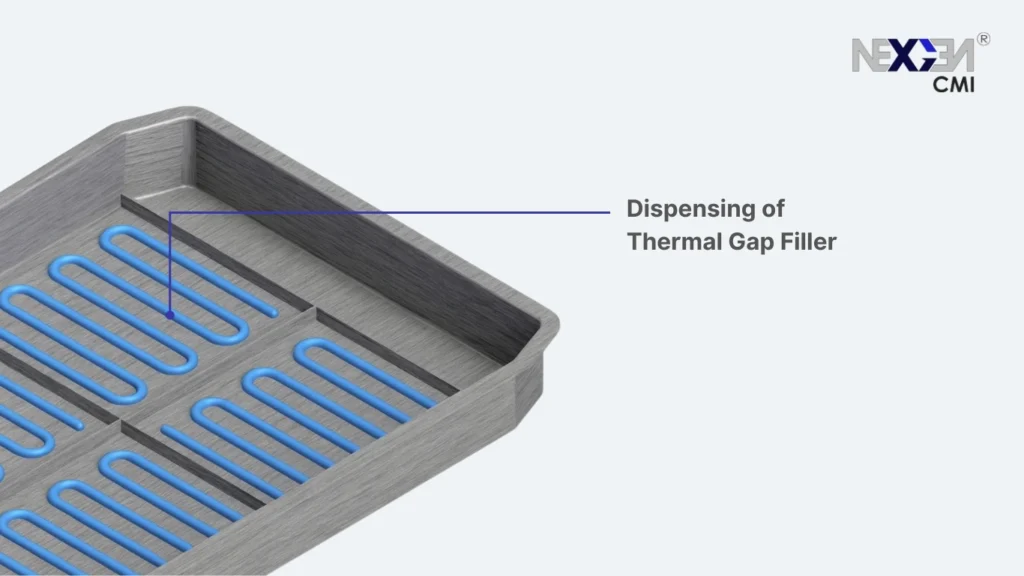
Thermally conductive gap fillers such as silicone- or epoxy-based pastes, gels, or phase-change materials are commonly used. However, these compounds typically exhibit high viscosity (up to 1,000,000 cP) and contain abrasive fillers to enhance thermal conductivity, requiring durable equipment and precise metering control. Moreover, accurate volumetric control is critical to maintain consistent bond-line thickness and eliminate voids that reduce heat transfer efficiency.
NEXGEN CMI’s dispensing systems provide bubble-free, uniform coverage and handle highly viscous, abrasive materials without flow fluctuation, ensuring consistent bead shape and full thermal contact even when material viscosity varies with temperature. The robust design provides long-term durability for continuous battery production environments.